

How to Photograph Shop Windows Without Glare: Polarizers, Angles, and Reflections
The display is perfect. Warm light falling across a stack of ceramic bowls, a hand-lettered card, a smear of afternoon sun on the sill. You raise the camera, take the frame, and get back a picture of the street behind you: a parked van, a lamppost, the top half of your own coat. Anyone who has turned a lens on a storefront knows this small disappointment.
The good news is that glass is predictable. It does exactly what physics says it will, every time, which means the fix is not luck but method. Once you understand the two images a window gives you, you can decide which one wins.
Two Pictures Layered in the Same Frame
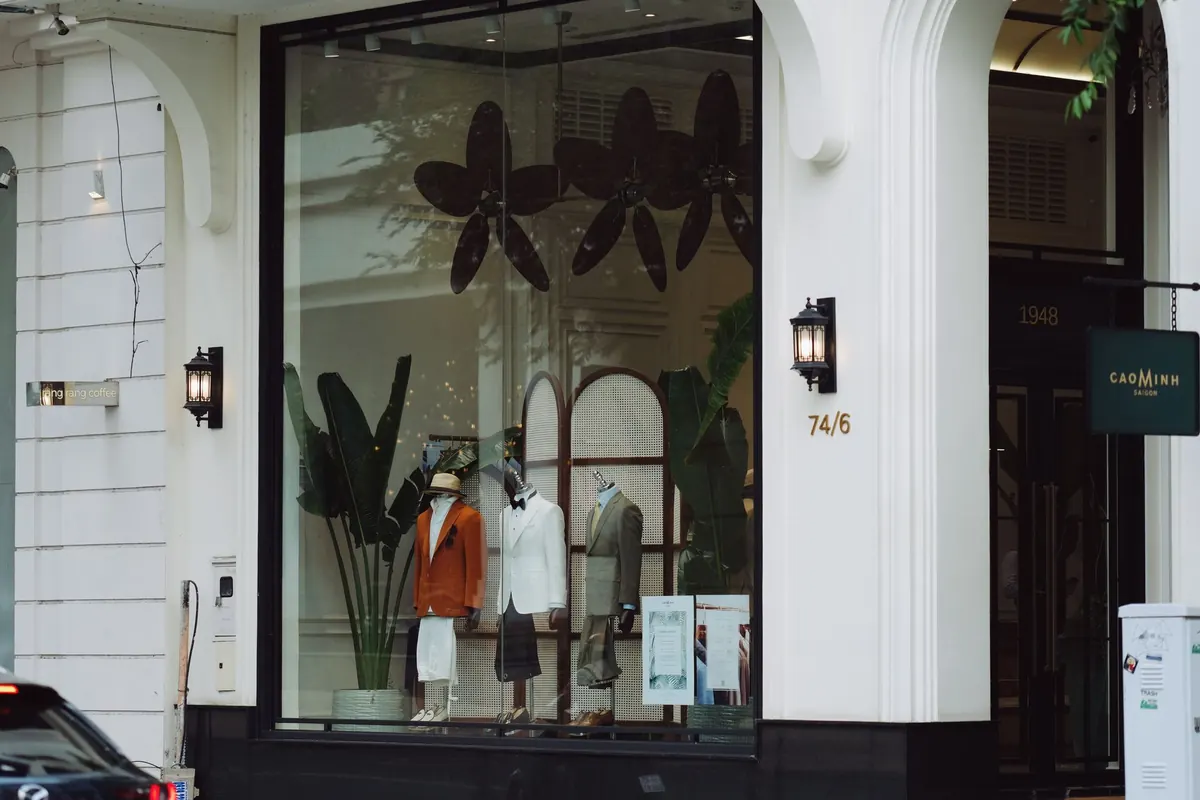
Every shop window shows you two things at once. The first is the display: light from inside the shop travelling outward through the glass toward your lens. The second is the reflection: light from the street — sky, buildings, traffic, signage, and you — bouncing off the outside surface of the pane.
Your whole job is managing the ratio between those two. When the shop interior is bright and the street is dark, the display wins easily. When the shop is dim and the sky is blazing, the glass turns into a mirror and you get a photograph of the weather instead of the merchandise.
Two variables decide how badly the glass misbehaves: the brightness of what is being reflected, and the angle you shoot from. A pane of glass reflects most strongly at very shallow, grazing angles, which is why the reflections at the top of the window tend to be the worst — that is where the sky lands.
The Polarizer Does Most of the Work
A circular polarizer is the single most useful accessory for this kind of work. It removes a large share of the light that has bounced off the glass while leaving most of the light coming through from the display, which is exactly the separation you want.
Rotate it while you watch, not before
The filter has no fixed setting. Screw it on, then turn the front ring slowly while watching the finder or, better, a magnified live view. Pick one specific reflective area — a patch of sky in the upper corner is ideal — and turn until it goes as dark as it will go. That is your starting point, not your final answer. Fine-tune from there, because you rarely want total removal; a trace of reflection keeps the window looking like a window.
Remember that the effect is not uniform across the frame. Surfaces at different angles to the lens polarize differently, so the left edge of a window may clean up beautifully while the right edge stays milky. If one corner refuses to cooperate, change your position rather than fighting the filter.
What a polarizer won't do
It will not remove reflections from chrome, brass, gold lettering, or mirrored signage — metal reflects in a way the filter cannot touch. It will not rescue a shot taken square-on to a window that is facing a bright sky. And it costs you a stop or two of light, which is almost never a problem with a static storefront.
Two practical cautions. On very wide lenses, a polarizer can darken one side of the sky more than the other and leave a patchy, uneven blue. And do not stack it in front of a UV filter; you are adding two surfaces, more flare, and a vignette you did not ask for.
Angles: Move Your Feet Before You Zoom
Reflection follows a simple rule: light leaves the glass at the same angle it arrived. If you can see the reflection of something in the window, that thing can also "see" you. Move and the reflected world slides across the pane.
This is the cheapest fix available. Slide along the pavement, a step left or right, and the reflection of the van behind you disappears off the edge of the frame while the display stays put. Crouch and the sky in the upper pane is replaced by the building opposite. Stand tall and you trade a low reflection for a high one. Photographers tend to zoom when they should walk; here, walking is the correction.
Working at a slight angle to the glass — thirty or forty degrees off square — does two things at once. It pushes your own reflection out of the picture, and it puts the window at an angle where the polarizer can act on it more effectively. The trade-off is that you are now looking at the display obliquely, so you may need to shift along the window to keep the composition squared up.
Blocking What You Can't Angle Away
Sometimes the geometry will not cooperate. The window faces a white building, the sun is out, and every angle gives you glare. Now you stop negotiating with the light and start blocking it.
- Get close and use your own body. Step right up to the glass and you become the dark shield behind the camera. Close enough, and the reflection of the street is replaced by a soft dark shape that reads as nothing at all.
- Cup the lens. A rubber lens hood pressed gently against the pane — only where the shopkeeper can see you doing it, and never on fragile or dirty glass — creates a black tunnel between lens and window. A hand works nearly as well.
- Carry something black. A folded jacket, a dark cloth, a black card. Hold it at the edge of the frame, out of shot, to kill a specific hotspot.
- Shoot from cover. A doorway, an awning, a bus shelter, a recessed entrance across the street. Anything that puts shade between your subject and the sky helps enormously.
- Wait for the weather. Overcast light is your friend: a flat white sky reflects as a soft veil rather than a hard glare, and the shop interior holds its own.
Glass never shows you only what is in front of it. It shows you what is in front of it and what is behind you, in the same frame, whether you asked for it or not.
After Sunset the Glass Changes Sides
At dusk the balance flips. The shop is lit, the street is not, and the window stops behaving like a mirror and starts behaving like a screen. This is the easiest hour to photograph storefronts, and it is why so many good shop-window pictures are evening pictures.
Watch for the new problems that arrive with the dark: streetlights bleeding in as bright spots, headlights sweeping across the frame, phone screens, the reflection of a lit sign across the road. Expose for the display and let the street fall away — spot-meter on a bright part of the interior, or set exposure manually and check the highlights. Mixed tungsten and LED lighting will confuse automatic white balance, so shoot raw and fix the colour later.
When You Want the Reflection
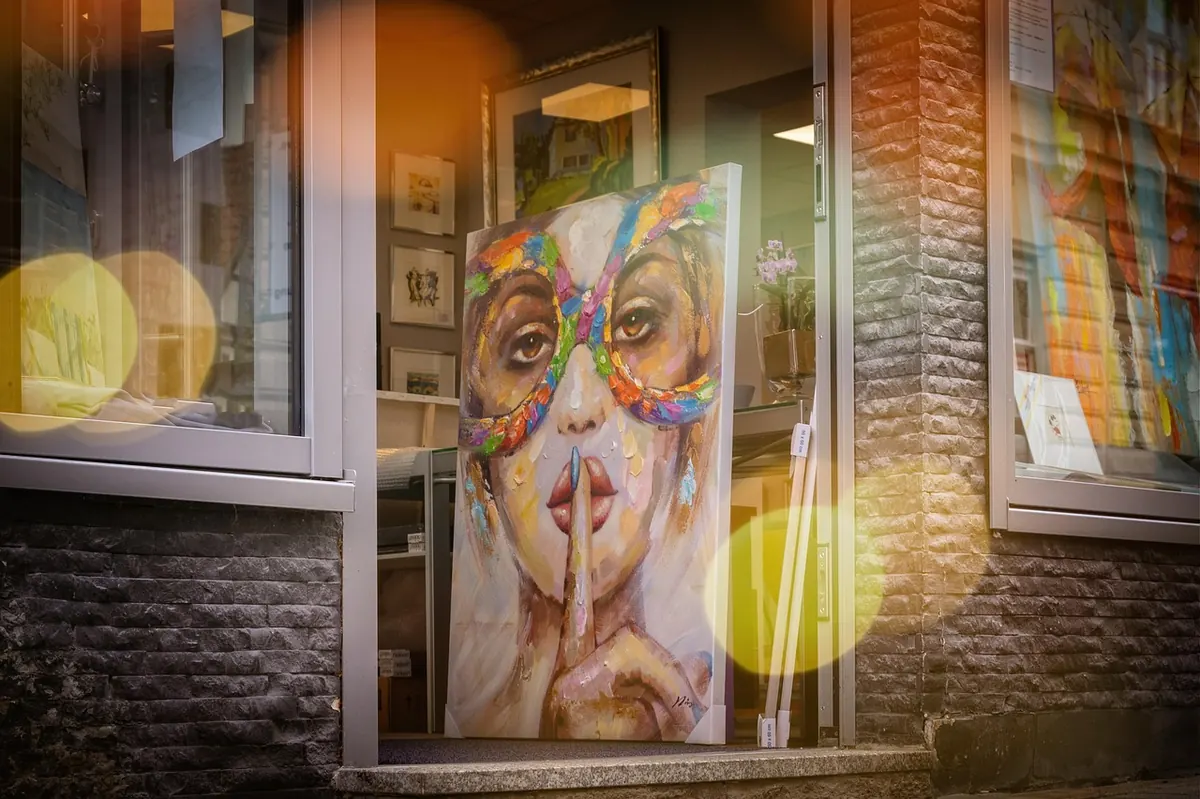
Everything above assumes the reflection is the enemy. Often it is the point. A shop window that mirrors a beautiful facade, a passing cyclist, a neon sign, a row of trees — that layering is one of the pleasures of the genre, and it says something about the shop's place in its street that a clean product shot never could.
To do it deliberately, look for windows facing something worth borrowing. Compose so the reflected subject sits in a defined area rather than smeared across the whole pane, and use the window frame, a mullion, or a change in the glass to divide the two images. Decide which layer is your subject and focus there — the display or the reflection, not vaguely at the glass between them. A small aperture helps if you want both readable; a wide one helps if you want the reflection soft and the merchandise sharp.
A Short Routine at the Window
- Look at the window from three or four metres away before raising the camera. Identify what is being reflected and where it comes from.
- Fit the polarizer, then rotate it while watching a bright patch of sky in the glass.
- Walk the length of the window and watch the reflections move. Pick the position where the display is clearest.
- Adjust height. Kneel, stand, tilt the screen — the reflected world changes more than you expect.
- If glare persists, block it: step in close, cup the lens, use a dark cloth, or find shade to shoot from.
- Take one frame with the reflections suppressed and one with them allowed. In the edit, the second is often the better photograph.
None of this takes long once it becomes habit, and the habit is worth building. A storefront is one of the few subjects in street photography that will hold still for you — the light will move, the street will change, and the window will keep offering you the same invitation. Learn its rules and it stops fighting back.
Photo: Tama66 / Pixabay